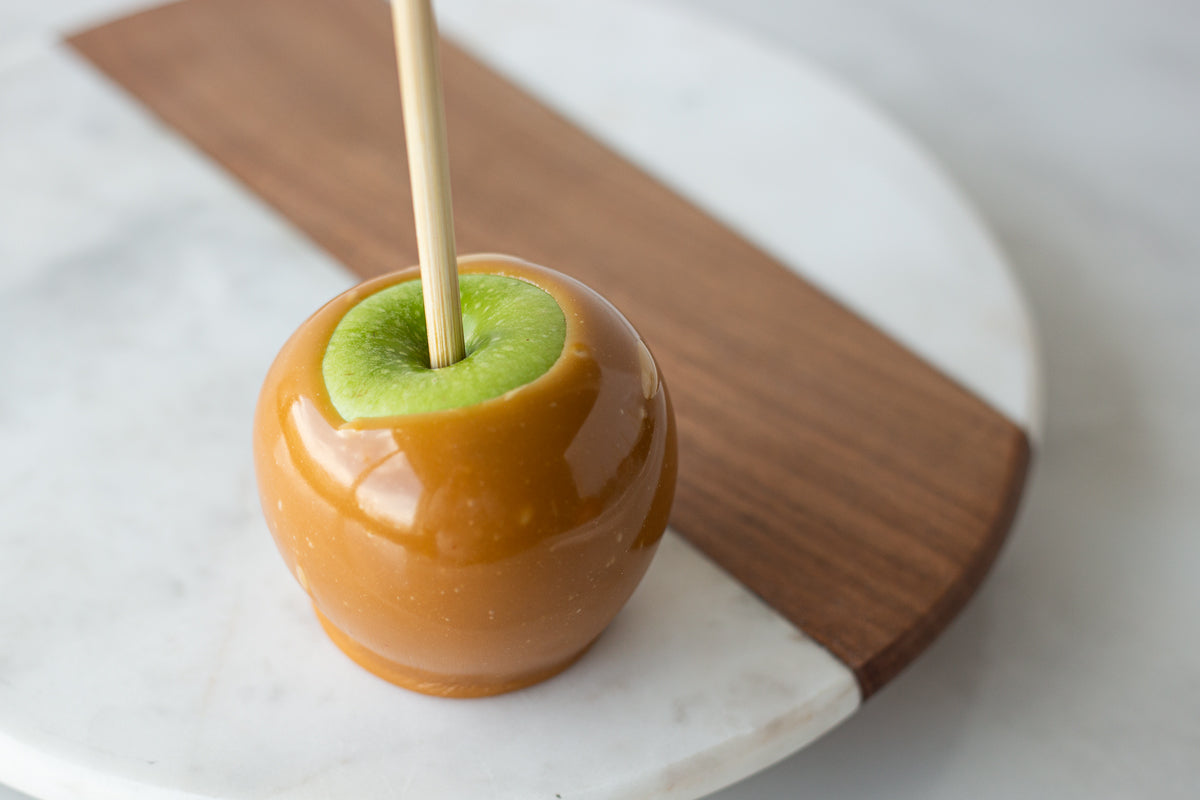
Peter’s Caramel is designed to make caramel-making easier, but even the most experienced bakers can run into a sticky situation.
Maybe your caramel is too thick. Maybe it isn't sticking to your apples. Maybe you've got bubbles, crystallization, or caramel that's hardening before you're finished dipping.
Don't worry—we've got you covered.
This Peter’s Caramel troubleshooting guide walks through some of the most common problems bakers and candy makers encounter and explains what you can do to get your caramel back on track.

1. Why Is My Peter’s Caramel Too Thick?
If your melted Peter’s Caramel is too thick for dipping or drizzling, it may simply need a little more heat.
As caramel cools, it naturally becomes thicker. If you're working with caramel for an extended period of time, it may need to be gently rewarmed to maintain a workable consistency.
How to fix it:
- Gently warm the caramel over low heat.
- For smaller amounts, use the microwave in short intervals.
- Stir gently as needed.
- If you need an even thinner consistency, add a small amount of heavy cream while melting.
Our caramel guidance recommends maintaining melted caramel within approximately 160–180°F, with about 170–180°F being the range for a fully melted, pourable consistency. Any hotter and you might end up scorching the caramel.
Pro tip: Don't crank up the heat just because the caramel is thick. Slow, controlled heating gives you much more control.

2. Why Is My Peter’s Caramel Too Runny?
If your caramel is unusually thin, it may be warmer than necessary or you may have added too much cream or another thinning ingredient.
How to fix it:
First, allow the caramel to cool slightly and see whether it thickens to the consistency you need.
If you've added cream, give the caramel time to cool before deciding that it needs additional ingredients.
For dipping applications such as caramel apples, you generally want caramel that is smooth and pourable but thick enough to coat the apple. With Peter's Caramel, you are ready to melt and dip without adding anything else.
Also, a thermometer can help you determine whether temperature is the issue.

3. Why Won't My Caramel Stick to My Apples?
This is one of the most common caramel apple frustrations.
If your caramel slides off the apple instead of sticking, the surface of the apple may be the problem.
Many grocery-store apples have a wax coating that can make it difficult for caramel to adhere properly. Moisture can also interfere with adhesion.
How to fix it:
- Wash your apples thoroughly.
- Remove as much waxy residue as possible with a rough towel.
- Dry the apples completely.
- Use firm, crisp apples.
- Make sure the caramel is at a good dipping temperature.
- Avoid inserting the stick too early.
Gygi recommends washing and drying apples carefully before dipping because wax and moisture can prevent the caramel from adhering properly.
Remember: Clean and completely dry apples are one of the most important secrets to successful caramel apples.
4. Why Is My Caramel Sliding Down the Apple?
If your caramel initially sticks but slowly slides toward the bottom of the apple, temperature and apple preparation are both worth checking.
Caramel that's too warm can be more difficult to keep in place, while very cold apples can cause the caramel to set differently.
How to fix it:
- Make sure your apples are clean and dry.
- Allow refrigerated apples to warm slightly before dipping.
- Make sure the caramel is within its recommended working temperature.
- Hold the dipped apple upside down briefly to allow excess caramel to drip off.
- Allow the caramel to begin setting before placing the apple upright.
If you notice a large pool of caramel forming around the bottom of the apple, allow the caramel to cool slightly before dipping the next apple.

5. Why Does My Caramel Have Bubbles?
A few bubbles in melted caramel aren't necessarily a problem.
Bubbles can come from stirring the caramel too much or from moisture escaping from the apple after dipping.
How to fix it:
When melting Peter’s Caramel, stir only as much as necessary.
Excessive stirring introduces air into the caramel, which can result in bubbles on the surface of dipped treats. We specifically recommend minimizing stirring when preparing caramel for dipping.
If you're making caramel apples, you may also notice bubbles developing around the area where the stick enters the apple. This can happen as apple juice or moisture moves toward the puncture point. This is why we don't usually coat all the way up to the stick.
Bottom line: A few bubbles don't mean your caramel is ruined. And if bubbles form on your apples, you can prick them with a toothpick before the caramel sets.
6. Why Did My Caramel Harden?
Caramel can harden when it gets too hot or when it cools significantly after melting.
If your caramel becomes hard after heating, overheating may be the culprit.
How to fix it:
Unfortunately, overheated caramel isn't always easy to bring back to its original texture. This is why preventing scorching is the key!
The best approach is prevention:
- Use low, controlled heat.
- Monitor the temperature with a thermometer.
- Avoid heating caramel significantly above its recommended working range.
- If using a microwave, heat in short intervals.
- Stir between microwave intervals.
Gygi's Caramel 101 Guide notes that caramel's melting point is approximately 160–180°F and recommends keeping the working temperature controlled to avoid cooking the caramel and creating a harder finished texture.
7. Why Is My Caramel Grainy or Crystallized?
Crystallization can sometimes happen if caramel has been refrigerated or frozen.
The good news? Crystallization doesn't necessarily mean your Peter’s Caramel is ruined.
How to fix it:
If you've refrigerated or frozen the caramel, allow it to return completely to room temperature before cutting or melting it.
Gygi recommends bringing the caramel fully back to room temperature to improve its texture before working with it.
To prevent unnecessary crystallization, store unused Peter’s Caramel in a cool, dry place rather than refrigerating it unless necessary.

8. Why Won't My Caramel Stay Warm Enough to Dip?
If you're making a large batch of caramel apples, it can take time to dip everything.
As you work, the caramel will gradually cool and become thicker.
How to fix it:
For a large batch, keep the caramel in a heavy pot and gently warm it as needed.
For smaller batches, you can briefly return the caramel to the microwave.
The goal is to maintain a workable temperature—not to make the caramel as hot as possible.
9. How Do I Thin Peter’s Caramel?
Sometimes you want a caramel that's softer and more fluid than the consistency you get from simply melting the loaf.
A small amount of heavy cream can be used to thin melted Peter’s Caramel.
How to thin Peter’s Caramel:
-
Melt the desired amount of caramel gently.
-
Add a small amount of heavy cream.
-
Stir until incorporated.
-
Check the consistency.
-
Add more cream gradually if needed.
We also note that sweetened condensed milk and butter can be used with a full 5-pound loaf when a thinner consistency is desired.
Important: You don't need to add anything to Peter’s Caramel. Simply to melt it. The caramel loaf is already formulated to melt into a rich, smooth caramel.
10. Why Is My Caramel Sticking to My Knife or Tools?
Peter’s Caramel is soft and sticky by nature, so some sticking is completely normal.
If you're cutting the caramel loaf, a sharp knife or bench scraper can make the job easier.
How to fix it:
- Use a sharp knife.
- Lightly oil the blade.
- A small amount of cooking spray can also help.
- Let very firm caramel soften slightly before cutting.
- Cut only the amount you need.
Gygi recommends allowing firm caramel to sit at room temperature for approximately 30–60 minutes or softening it briefly in the microwave for 5–10 seconds before cutting.

Bonus: What If My Caramel Apple Has a Pool of Caramel at the Bottom?
If caramel collects around the bottom of your apple after dipping, don't immediately assume you've done something wrong.
A small amount of pooling can happen as gravity pulls excess caramel downward.
How to fix it:
After dipping:
-
Lift the apple from the caramel.
-
Let excess caramel drip back into the pot and scrape the bottom.
-
Hold the apple upside down for a few seconds.
-
Place the apple on parchment or a silicone mat once the caramel begins to set.
If you're getting significant pooling on every apple, let your caramel cool slightly before dipping the next batch.
Peter’s Caramel Troubleshooting Quick Reference
| Problem | Likely cause | What to try |
|---|---|---|
| Caramel is too thick | Caramel has cooled | Gently rewarm |
| Caramel is too runny | Caramel is too warm or too much thinning liquid | Let it cool slightly |
| Caramel won't stick to apples | Wax or moisture on apples | Wash and dry apples thoroughly |
| Caramel slides down apples | Temperature or excess caramel | Adjust temperature and allow excess to drip off |
| Caramel has bubbles | Too much stirring or moisture | Stir minimally |
| Caramel hardened | Overheating | Use lower, controlled heat |
| Caramel is crystallized | Refrigeration/freezing | Return fully to room temperature |
| Caramel cools too quickly | Working in batches or low ambient temperature | Gently rewarm as needed |
| Caramel needs to be thinner | Desired application requires a softer consistency | Add a small amount of heavy cream |
| Caramel sticks to tools | Caramel is naturally sticky | Lightly oil your knife |
How to Prevent Peter’s Caramel Problems Before They Start
The easiest caramel problem to fix is the one you never have.
Keep these tips in mind the next time you work with Peter’s Caramel:
Use Low, Controlled Heat
Whether you're using the oven, microwave, or stovetop, gentle heat gives you better control.
Use a Thermometer
Temperature makes a significant difference in caramel texture. A thermometer takes the guesswork out of determining whether your caramel is ready to dip or pour.
Cut the Caramel Into Smaller Pieces
If you're melting a smaller amount, cutting the loaf into chunks can help it heat more evenly.
Don't Over-Stir
Stirring is sometimes necessary, but excessive stirring can introduce air bubbles into the caramel.
Keep Apples Clean and Dry
If you're making caramel apples, proper apple preparation is just as important as properly melted caramel.
Have Everything Ready Before You Start
Caramel waits for no one.
Prepare your apples, sticks, toppings, parchment, tools, and workspace before melting your caramel. That way, when your caramel reaches the right consistency, you're ready to dip.
Last Thoughts
Working with caramel can be a little messy, but most Peter’s Caramel problems have a simple solution.
If your caramel is too thick, gently warm it. If it won't stick to your apples, check for wax and moisture. If you see bubbles, try stirring less. If the caramel has crystallized after refrigeration, let it return completely to room temperature before working with it.
And remember: temperature, moisture, and patience are your three biggest tools when working with caramel.
Once you understand how caramel behaves, it's much easier to troubleshoot—and much more fun to experiment.
For more Peter’s Caramel tips, check out our guides on how to store, cut, and melt Peter’s Caramel, or explore our favorite caramel recipes and ideas.