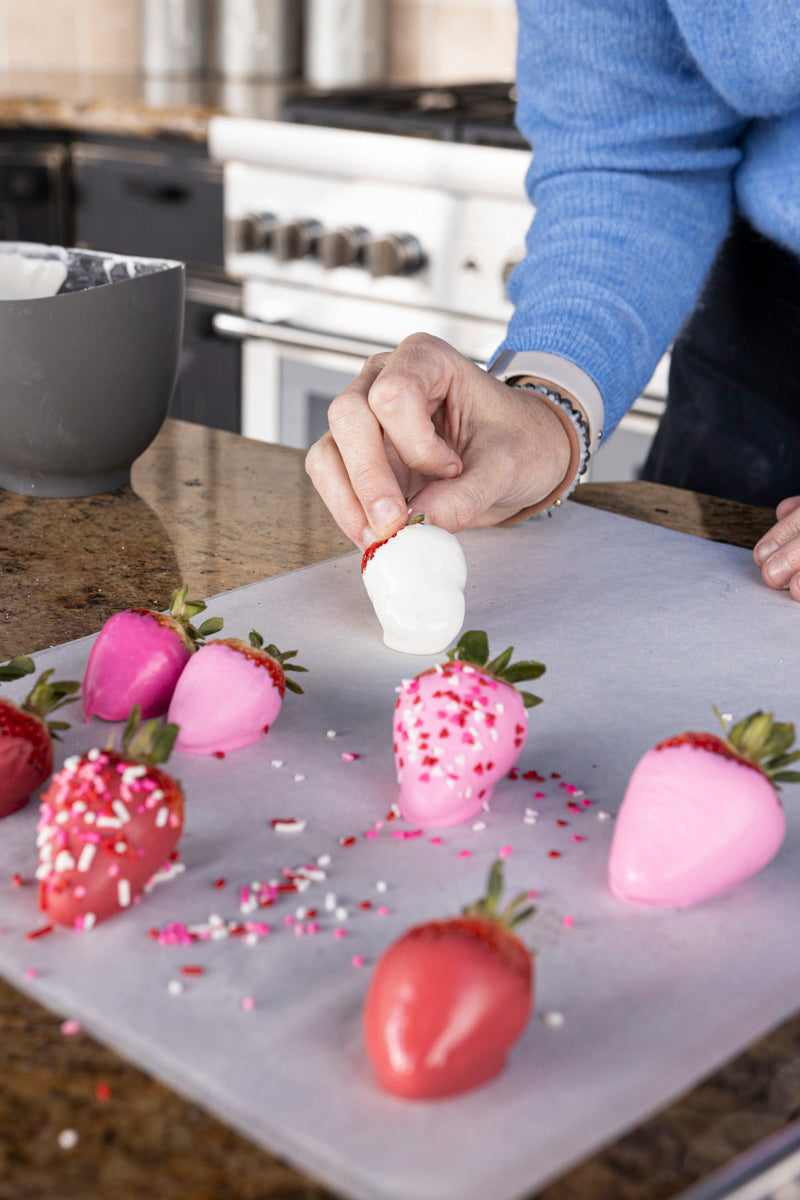
There's nothing quite like smooth, melted chocolate. Whether you're dipping strawberries, drizzling chocolate over pretzels, making homemade candy, or whipping up a batch of chocolate-covered treats, getting that perfect consistency makes all the difference.
But here's the thing: chocolate can be a little finicky. Heat it too quickly, and it can scorch. Let a little water sneak in, and it can turn into a thick, clumpy mess.
The good news? Learning how to melt chocolate is easier than you think!
The best way to melt chocolate depends on the type of chocolate and what you're making. The microwave is quick and convenient, while a double boiler (while it invites water) gives you control over the heat. Both methods work beautifully when you take your time and stir often.
Let's walk through the best ways to melt chocolate, how to choose the right chocolate for your project, and what to do when things don't go quite as planned.

What's the Best Way to Melt Chocolate?
There are two typical go-to methods for melting chocolate at home: the microwave and a double boiler. Neither is necessarily better for every situation. It comes down to your recipe, the amount of chocolate you're melting, and how much control you want over the process.
|
Method |
Best For |
Biggest Benefit |
|
Microwave |
Small batches, quick recipes, and everyday projects |
Fast and convenient |
|
Double boiler |
Larger batches, delicate melting, and more controlled heating |
Gentle, even heat |
|
Commercial chocolate melter |
Frequent candy making and keeping chocolate warm while working |
Consistent temperature control when used properly |
For most home projects, the microwave or double boiler will do the trick. Let's look at how each method works.

Method 1: How to Melt Chocolate in the Microwave
Need melted chocolate in a hurry? The microwave is your best friend! This is our method of choice.
It's an easy way to melt chocolate for dipping, drizzling, decorating, and baking. The trick is to use short bursts of reduced heat and stir frequently instead of letting the microwave do the work all at once.
What You'll Need
- Chocolate bars, wafers, or chips
- A microwave-safe bowl
- A dry spatula or spoon
- A microwave
Step-by-Step Instructions
1. Chop your chocolate, if needed.
If you're using a chocolate bar or large block, chop it into small, evenly sized pieces. Smaller pieces melt more evenly and help prevent some areas from overheating while others remain solid.
Chocolate wafers and chips can usually go straight into the bowl. And yes, we love using our silicone bowls for melting all kinds of chocolate.
2. Place the chocolate in a microwave-safe bowl.
Make sure your bowl and utensils are completely dry. Even a small amount of water can cause melted chocolate to seize.
3. Microwave in short intervals.
Start with 20–30 seconds at about 50% power. Remove the bowl and stir thoroughly.
Continue microwaving in 15–20-second intervals, stirring after each one. As the chocolate melts, shorten the intervals if needed.
4. Let the residual heat do some of the work.
Here's a little chocolate-making secret: you don't need to microwave every last piece until it's completely melted.
Once most of the chocolate is melted, stir continuously and let the warmth of the melted chocolate soften the remaining pieces.
5. Check the temperature and consistency.
Your chocolate should be smooth and evenly melted, with no large lumps. If you need it for dipping or molding, check the temperature labels and instructions on the packaging and make sure it has the consistency your recipe requires.
If you're using couverture chocolate for a glossy coating, remember that melting and tempering are two different steps. You'll need to temper couverture chocolate for the proper finish and can learn all about that in our Quick Guide to Tempering.
Microwave Melting Tips
- Use a lower power setting to help prevent overheating.
- Stir between every interval, even if the chocolate doesn't look melted yet.
- Use a bowl with plenty of room for stirring.
- Avoid overheating the chocolate in an attempt to speed things up.
- Follow the manufacturer's instructions for specialty melting wafers or compound chocolate.
Our biggest tip? Be patient! Chocolate often holds its shape even after it begins to melt, so stirring is essential for checking its true consistency.
Method 2: How to Melt Chocolate Using a Double Boiler
If you want more control over the melting process, a double boiler is a good option.
A double boiler uses gentle heat from hot water to warm a bowl or pot of chocolate. It's especially helpful when you're melting a larger batch or working on a project that requires a little extra attention.
Don't have a double boiler? No problem. You can create a simple version with a saucepan and a heatproof bowl.
What You'll Need
- Chocolate bars, wafers, or chips
- A saucepan
- A heatproof bowl that fits securely over the saucepan
- A dry spatula or spoon
- Water
Step-by-Step Instructions
1. Prepare your chocolate.
Chop your chocolate into small, evenly sized pieces if necessary. Place it in a clean, completely dry, heatproof bowl.
2. Add water to your saucepan.
Fill the saucepan with a few inches of water. You only need enough to create steam and gentle heat beneath the bowl.
3. Heat the water gently.
Bring the water to a gentle simmer, then reduce the heat. Avoid a vigorous boil, which can create excessive steam (ah! water!) and make the bowl too hot.
4. Set the bowl over the saucepan.
Place the bowl over the pan, making sure the bottom of the bowl does not touch the water.
Keep the bowl stable and make sure steam cannot easily escape into the chocolate.
5. Stir as the chocolate melts.
Stir gently and frequently as the chocolate softens. Continue until it's smooth and melted, then when you get to the desired temperature and consistency, remove the bowl from the heat.
6. Use your melted chocolate.
Your chocolate is ready for your recipe. If you're working with couverture chocolate for dipping or molding, you'll still need to temper it if you want that glossy finish and satisfying snap.
Double Boiler Melting Tips
- Keep the water at a gentle simmer rather than a rolling boil.
- Make sure no water or steam gets into the chocolate.
- Use oven mitts or a towel when handling a hot bowl.
- Remove the bowl from the heat once the chocolate is melted.
- Wipe any condensation from the outside of the bowl before moving it near your workspace.
A double boiler gives you gentle heat, but it isn't completely foolproof. Chocolate can still overheat, so keep an eye on it and stir regularly.
Can You Melt Chocolate Chips?
Sure! You can melt chocolate chips in the microwave or using a double boiler. In fact, you probably already have, with varying levels of success. But we don't usually recommend it.
Chocolate chips (aka baking chips) are generally formulated to hold their shape during baking. Depending on the product, they may not melt into the same smooth, fluid consistency as chocolate specifically designed for dipping or coating.
If you're making cookies or brownies, chocolate chips are a great choice. If you're dipping strawberries, making molded chocolates, or coating candy, you will likely prefer couverture chocolate or compound melting wafers.
Not sure which one to buy? Read our guide to Which Chocolate Should I Use?
What's the Difference Between Melting Chocolate and Tempering Chocolate?
This is an important distinction, especially if you're planning to make chocolate-covered treats or molded candies.
Melting chocolate simply means heating it until it becomes liquid. Tempering chocolate is a controlled heating and cooling process that stabilizes cocoa butter crystals.
Why does that matter?
When couverture chocolate is properly tempered, it sets with a smooth, glossy finish and a firm snap. It also helps the finished chocolate resist fat bloom, those white or gray streaks that can develop when cocoa butter crystals become unstable.
Compound chocolate, on the other hand, is formulated to melt and set without tempering.
Here's a quick breakdown:
|
Process |
What It Does |
When You Need It |
|
Melting |
Turns solid chocolate into liquid |
Whenever your recipe calls for melted chocolate |
|
Tempering |
Stabilizes cocoa butter crystals in real chocolate |
When using couverture chocolate for a proper coating, molded pieces, or a glossy finish |
|
Setting |
Allows melted or prepared chocolate to become firm again |
After dipping, molding, or coating |
If you're working with couverture chocolate, don't skip the tempering step when your project calls for a professional-looking finish.
Ready to learn the process? Check out our How to Temper Chocolate guide.
How to Melt Chocolate Without Burning It
Chocolate doesn't need extremely high heat to melt. In fact, too much heat is one of the easiest ways to ruin a batch.
Here are a few ways to keep your chocolate smooth and avoid overheating.
Use short heating intervals. Whether you're using the microwave or a double boiler, gentle heat gives you more control.
Stir often. Chocolate can melt unevenly, and stirring helps distribute heat throughout the bowl.
Choose the right bowl. Use a microwave-safe bowl for microwave melting and a heatproof bowl for a double boiler.
Keep water away from your chocolate. Water can cause melted chocolate to seize, turning it thick and grainy.
Stop heating before every piece has melted. If most of the chocolate is liquid, stir and let the residual heat finish melting the remaining pieces.
Follow the product instructions. Different chocolates and melting wafers have different compositions and recommended handling methods.
If you're melting chocolate for a candy-making project, the right tools can make the process much easier. A good spatula, a reliable thermometer when temperature matters, and the right chocolate for your recipe can go a long way.

How to Fix Common Chocolate Melting Problems
Even experienced chocolate makers run into trouble every now and then. Here's how to troubleshoot some of the most common problems.
Why Is My Melted Chocolate Thick and Clumpy?
If your chocolate suddenly becomes thick, grainy, or paste-like, it may have seized because moisture got into the bowl. It may also have overheated.
First, remove it from the heat.
If water caused the chocolate to seize, adding a small amount of warm cream or another suitable liquid can sometimes transform it into a sauce or ganache you can use in baking. That said, it won't restore it to its original consistency for dipping or tempering. Sad!
If the chocolate has overheated, it may be difficult to restore its original texture. Depending on the severity, you will probably need to start a fresh batch for your project.
Why Is My Melted Chocolate Too Thick for Dipping?
Some chocolates are naturally thicker than others, and chocolate chips will probably be less fluid than products designed for dipping.
First, make sure the chocolate is fully melted and hasn't cooled too much. If it's still too thick, check the product instructions before adding anything.
A small amount of a compatible fat may be appropriate for some recipes, but don't add butter, water, or oil automatically. These additions will change how the chocolate behaves, especially if you're trying to temper couverture chocolate.
For the smoothest dipping experience, make sure you choose a chocolate specifically formulated for coating or dipping.
Why Won't My Chocolate Melt Smoothly?
The chocolate may be melting unevenly, the pieces may be too large, or the heat may be too low or too high. This is common in the microwave!
Try chopping the chocolate into smaller pieces, stirring thoroughly, and using shorter heating intervals.
If you're using chocolate chips, again keep in mind that their formulation may produce a thicker consistency than dipping chocolate.
Why Does My Chocolate Have White Streaks?
White or gray streaks can be a sign of chocolate bloom. Fat bloom occurs when cocoa butter crystals become unstable, while sugar bloom can develop when moisture dissolves sugar on the surface and the sugar recrystallizes.
If you're using couverture chocolate, improper tempering can contribute to fat bloom.
For more information, see our guide to How to Temper Chocolate.
How Do You Keep Melted Chocolate Warm?
If you're dipping several batches of treats, you'll want to keep your chocolate at a workable temperature while you decorate.
The key is gentle, controlled warmth.
For small batches, you can occasionally return the chocolate to the microwave for a few seconds or briefly place it back over a double boiler. Stir thoroughly and check the consistency before continuing.
For larger or frequent candy-making projects, a chocolate melter or tempering machine designed for the job can help maintain a consistent working temperature and might be worth the investment.
Keep in mind that the ideal temperature depends on the type of chocolate and what you're making. If you're tempering couverture chocolate, you need to maintain its working temperature without disrupting the temper.
Avoid leaving chocolate over direct heat for extended periods, and always follow the manufacturer's temperature recommendations.
What Can You Make With Melted Chocolate?
Now for the fun part!
Once you know how to melt chocolate, you can use it in all kinds of delicious creations.
- Chocolate-covered strawberries: Dip fresh strawberries in melted chocolate and decorate with a drizzle of contrasting chocolate. Follow our guide to making chocolate-covered strawberries.
- Chocolate-dipped pretzels: Add a sweet-and-salty twist to your favorite pretzels. Combine with sprinkles, drizzle with contrasting chocolate, or dress them up for your next party. Learn the steps in homemade chocolate-covered pretzels.
- Homemade chocolate candies: Ready to get creative? Pour tempered chocolate into candy molds to create treats for gifting or parties. Explore our Gygi Chocolate Box.
- Chocolate-dipped cookies: Give cookies, biscotti, or shortbread a delicious chocolate coating. Here's the recipe for Chocolate Sugar Cookies.
- Chocolate drizzles: Add a finishing touch to cakes, brownies, cupcakes, and other desserts with a simple and structured chocolate drizzle.
- Homemade truffles: Turn chocolate and cream into rich, bite-sized treats. Check out our Chocolate Truffle recipe.
The best part? You can experiment with different chocolates, flavors, toppings, and decorations to make each project your own.
Frequently Asked Questions About Melting Chocolate
Is it better to melt chocolate in the microwave or on the stove?
Both methods work well. The microwave is quick and convenient for small batches, while a double boiler provides gentle, controlled heat. The best choice depends on the amount of chocolate you're melting and the project you're making.
Do you need to add oil when melting chocolate?
No. Chocolate can be melted on its own. Some recipes call for a compatible fat to adjust the consistency, but adding oil isn't required for ordinary melting and can affect the finished result.
Can you melt chocolate directly in a saucepan?
You can, but it's so much easier to overheat chocolate when it sits directly over the heat source. A double boiler provides more control and significantly reduces the risk of scorching.
How long does it take to melt chocolate?
It depends on the amount of chocolate, the size of the pieces, the heating method, and the power or temperature used. Small amounts can melt in a matter of minutes, but the safest approach is to use short intervals, stir frequently, and watch the consistency rather than relying on a fixed time.
Can you remelt chocolate that has already hardened?
Yes, in many cases. Solidified chocolate can generally be melted again using gentle heat. If you're working with couverture chocolate and want a glossy finish and proper snap, you'll need to temper it as required.
What chocolate is best for dipping?
Couverture chocolate is a great choice when you want rich chocolate flavor, shine, and snap, provided it's properly tempered. Compound chocolate is a convenient option when you want chocolate that melts and sets without tempering.
Ready to Melt Some Chocolate?
Now you know the basics! Whether you're using the microwave for a quick drizzle or a double boiler for a bigger batch, the secret to smooth melted chocolate is gentle heat, frequent stirring, and keeping moisture away.
And remember: the chocolate you choose matters just as much as the method you use. Couverture, compound chocolate, and baking chips all have their place in the kitchen.
Ready to get started? Explore our selection of chocolate and candy-making supplies and find everything you need for your next chocolate adventure.
Happy melting!